Table of Contents
Autodesk Maya 2026
Autodesk Maya 2026 is a leading 3D computer graphics software used extensively across industries such as film, television, game development, and architecture for creating stunning visual effects, animations, and realistic simulations. Renowned for its comprehensive set of tools, Maya enables artists and designers to model complex 3D objects, animate characters with precision, and render high-quality images using integrated technologies like Arnold.
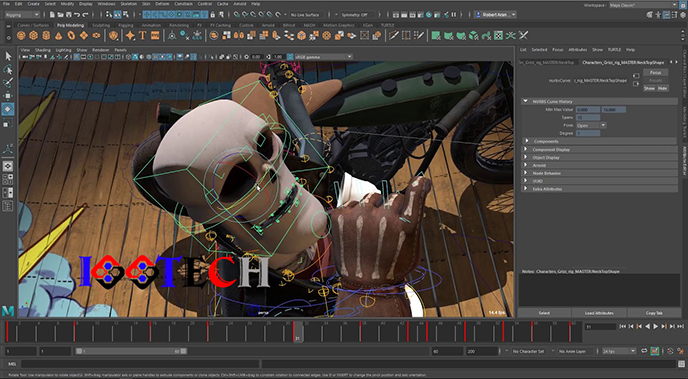
The software boasts powerful features for polygonal and NURBS modeling, advanced rigging and animation capabilities, and dynamic simulation tools for realistic physical behaviors. With its robust scripting options using MEL or Python, users can automate workflows and customize their 3D environment, making Maya a versatile tool that caters to the diverse needs of creative professionals.
Features
- Geometry Mode dropdown
- Activate Volume from the Geometry Mode dropdown in the boolean node. You can use the Boolean stack to also change the display mode for your input objects.
- Volume: Your input object is turned into a volume. When Volume is selected, your objects are converted into volumes, where the Boolean operation is calculated.
- The Boolean result is then converted back to meshed polygons. Volume-based meshing only works with the following boolean operations: union, difference (a-b), difference (b-a), intersection.
- Animate in context is a Flow-connected capability with Maya and Flow Production Tracking that bring cuts directly to the artist’s working environment. This lets animators and other shot-based artists view shots surrounding their active scene and scrub between their work and others’ so they can make informed choices that improve cut continuity. It also lets them switch between different pipeline steps (like layout, animation, FX, etc) at the cut and individual shot level so they can filter the type of context they’re referencing as it relates to their working shot.
- A new meshing mode has been added to Maya’s Boolean node, enabling your results to be computed through volumetric meshing. The Volume mode produces a unified mesh quickly from watertight operations, letting you create new shapes and forms to aid in your workflows. For example, you can use it to combine shapes that you have blocked in to create new, organic models like creatures and characters.
- The Volume mode also keeps the original shapes and forms accessible and adjustable, so that you can fine tune the results to what you need. You can use the output mesh in conjunction with other tools within Maya, such as our retopology and sculpting tools, to further refine and take your models to the next level.
- Improved shape training: When training the deformer, a new Tune Principal shapes during training mode is available, which parameterizes principal shapes so they can be adjusted during training. This can improve results, especially when all the training poses don’t fit in the SVD analysis.
- Learn Surface: A new Learn Surface option has been added to the training window, which can improve noisy results.
- Dynamic loading now works with all training options.
System requirements
- Supported OS: Windows 7/8/10/11
- 2.5–2.9 GHz processor Recommended: 3+ GHz processor
- Memory (RAM): 8 GB Recommended: 16 GB
- Hard disk space: 6.0 GB of free disk space for installation
- CPU: Intel or AMD 64-bit multi-core processor
Autodesk Maya 2026 Free Download
Autodesk Maya Multilang 2026 x64
Autodesk Maya Creative 2026 x64
Autodesk Collection